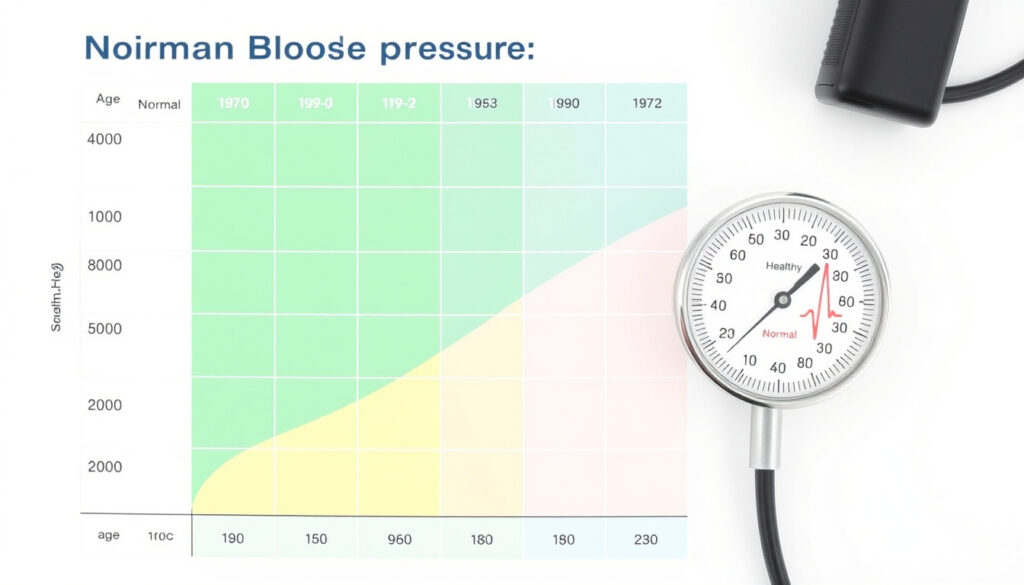
What Is Normal Blood Pressure? Chart by Age & Readings
Most adults know blood pressure matters for health, yet fewer can say whether their own numbers fall in a healthy range. According to the American Heart Association, a normal reading sits below 120/80 mm Hg — though “normal” shifts with age, gender, and even the time of day. This guide cuts through the medical jargon to explain what your numbers mean, where the danger zones lie, and what stroke-level blood pressure actually looks like.
Normal adult range: <120/80 mm Hg · High blood pressure: ≥140/90 mm Hg · Ideal reading: <120/70 mm Hg · Adults affected in Ireland: 1 in 3 · Typical adult reading: around 120/80 mm Hg
Quick snapshot
- Normal BP is <120/80 mm Hg for most adults (Baptist Health)
- Hypertension Stage 1: 130-139/80-89 mm Hg (Baptist Health)
- Exact stroke threshold varies by individual health factors (ISH Global Guidelines)
- Some pediatric sources show inconsistent diastolic ranges for school-age children (Doctronic)
- 2017: AHA/ACC unified age-based thresholds (Harvard Health)
- 2025: AHA introduced <130 systolic for cognitive protection (PMC)
- 2026: AHA updated to <130/80 treatment target (Inova Newsroom)
- Updated AHA guidelines expected to shift clinical practice toward tighter BP control (Inova Newsroom)
- Growing focus on time-of-day monitoring may influence home testing recommendations (CPRAEDCourse)
Four blood pressure categories, one clear pattern: lower is generally better, but not dangerously so.
| Category | Systolic (mm Hg) | Diastolic (mm Hg) |
|---|---|---|
| Normal | <120 | <80 |
| Elevated | 120–129 | <80 |
| Hypertension Stage 1 | 130–139 | 80–89 |
| Hypertension Stage 2 | ≥140 | ≥90 |
Blood pressure classification follows these AHA-defined thresholds, with each stage carrying progressively higher cardiovascular risk.
What is good blood pressure by age?
Blood pressure naturally creeps upward as arteries stiffen with age. That said, what’s considered “good” varies meaningfully between age groups and between sexes — a point many generic charts gloss over.
Adults
For adults aged 18–39, average normal readings run around 110/68 mm Hg for women and 119/70 mm Hg for men, according to detailed charts from Baptist Health. By the 40–59 age bracket, those averages shift to 122/74 mm Hg for women and 124/77 mm Hg for men — a modest but consistent rise driven by gradual arterial stiffening. Estrogen provides some cardiovascular protection in premenopausal women, which helps explain why young women typically run several points lower than their male peers.
65 year olds
Adults in their 60s show higher systolic averages: 139/68 mm Hg for women versus 133/69 mm Hg for men. Post-menopause, women actually overtake men in systolic pressure — a reversal from younger years. Doctronic notes that arterial stiffening increases systolic pressure over time while diastolic pressure often stabilizes or drops, widening the pulse pressure in older adults. The implication: a 65-year-old woman reading 135/70 mm Hg is actually tracking within her expected range, not heading toward danger.
70 year olds
Blood pressure expectations for 70 year olds align with the 60+ category under current guidelines. Harvard Health explains that the American Heart Association moved away from age-stratified targets in 2017 — previously, those over 65 faced a looser threshold of 150/80 mm Hg. Today, the universal treatment target applies regardless of age: below 130/80 mm Hg, with an ideal goal of approaching 120/80 mm Hg where safely achievable.
Is 140 over 70 a normal blood pressure?
Reading a blood pressure monitor correctly means understanding what each number represents — and neither of those figures tells the whole story on its own.
Systolic vs diastolic
The top number — systolic pressure — measures the force your heart generates when it beats. The bottom number — diastolic pressure — measures the resistance in your blood vessels between beats. Both numbers matter independently. Baptist Health defines elevated blood pressure as 120–129 systolic with less than 80 diastolic, and high blood pressure as 140 or greater systolic or 90 or greater diastolic. A reading of 140/70 mm Hg puts your systolic squarely in Stage 2 hypertension territory, even though your diastolic sits comfortably below 80.
What numbers mean
With a systolic of 140 mm Hg, you fall outside the “normal” band — no matter how reassuring the bottom number looks. The American Heart Association recommends treating anyone at 140/90 mm Hg or above for hypertension, and the 2026 update pushes the treatment target even lower: below 130/80 mm Hg. A 140/70 reading isn’t a pass; it’s a signal to speak with your doctor about lifestyle changes or treatment options.
A diastolic of 70 looks reassuring, but systolic of 140 puts you in Stage 2 hypertension territory. Always look at both numbers — the top one is calling the shots here.
What is the danger zone for BP?
Blood pressure risks aren’t binary. They climb through stages, each with its own implications for what happens next.
High range
Hypertension Stage 1 (130–139 systolic or 80–89 diastolic) and Stage 2 (140+ systolic or 90+ diastolic) both require medical attention, but Stage 2 carries substantially elevated cardiovascular risk. The International Society of Hypertension identifies Stage 2 as the threshold where most guideline-recommended interventions kick in, including medication for patients without contraindications. The risk isn’t abstract: every 20 mm Hg rise in systolic or 10 mm Hg rise in diastolic roughly doubles your risk of heart disease or stroke.
Stroke level
When systolic pressure climbs above 180 mm Hg or diastolic above 120 mm Hg, you’ve entered hypertensive crisis — the zone where stroke risk climbs sharply. Baptist Health identifies readings above 180/120 mm Hg as requiring immediate medical attention. The paradox: a hypertensive crisis often strikes without warning. Most people who experience a crisis report feeling relatively normal beforehand — the reading itself is the alarm.
A stroke-level blood pressure is silent until it’s not. By the time symptoms like chest pain or vision changes appear alongside a 180/120 reading, you’ve already crossed into medical emergency territory. Home monitoring isn’t optional if you’re in the high-risk zone.
What is stroke level blood pressure?
Stroke-level blood pressure doesn’t always announce itself. Understanding when your numbers cross into emergency territory matters more than most people realize.
Hypertensive crisis
Greater than 180/120 mm Hg constitutes a hypertensive crisis requiring immediate medical evaluation, according to Baptist Health. Medical professionals distinguish between hypertensive urgency (no organ damage, gradual reduction acceptable) and hypertensive emergency (organ damage present, immediate intervention required). The American Heart Association’s 2025 guideline update also links sustained systolic pressure above 130 mm Hg to increased risk of mild cognitive impairment and dementia — adding neurological risk to the well-established cardiovascular dangers.
Warning signs
Classic warning signs accompanying extreme readings include chest pain, difficulty breathing, severe headache, vision changes, or weakness on one side of the body. But here’s what makes stroke-level blood pressure particularly dangerous: many people experience no symptoms at all until the stroke itself. Research published in PubMed documents that peak exercise systolic pressure in men aged 20–29 reaches a 90th percentile of 210 mm Hg — far above resting stroke thresholds — without causing symptoms in healthy individuals. What this means: your blood pressure can reach dangerous levels temporarily without telling you anything is wrong.
“The recommended universal treatment target is a blood pressure of less than 130/80 mmHg, with a goal of getting as close to 120/80 mmHg as possible.”
— American Heart Association (Medical Organization)
“The 2025 guideline endorses a firm systolic BP goal of < 130 mm Hg to reduce the risk of mild cognitive impairment and dementia."
— AHA/ACC (Guideline Authors)
What time of day is blood pressure highest?
Blood pressure doesn’t stay flat throughout the day. Your readings at 7 a.m. and 7 p.m. can differ by 20 points — and timing matters for both monitoring accuracy and cardiovascular risk.
Morning readings
Blood pressure typically rises in the morning and falls through the afternoon and early evening, according to CPRAEDCourse. This morning surge occurs partly due to the body’s release of stress hormones — cortisol and norepinephrine — as you wake. For some people, morning systolic pressure runs 20 mm Hg higher than their daytime average. The Doctronic analysis notes that this isn’t a sign of illness; it’s a normal circadian pattern. But it does mean that if you’re only checking your blood pressure in the afternoon, you may be missing your highest readings.
Daily patterns
Blood pressure follows a predictable arc: peaks in the morning, dips in the afternoon, and reaches its lowest point during sleep. Metropolis Healthcare notes that “dipper” patterns — where nighttime readings fall 10–20% below daytime levels — are considered healthy. Non-dippers, whose pressure stays elevated overnight, face higher cardiovascular risk. The pattern: tracking your blood pressure at consistent times each day reveals more about your actual risk than a single random reading ever could.
Related reading: Symptoms of Kidney Disease · Where to Inject Ozempic
Medical authorities like the AHA provide a AHA normal blood pressure chart that details healthy ranges across all age groups and genders for better context.
Frequently asked questions
What is a normal blood pressure for a woman?
For women aged 18–39, average normal BP runs around 110/68 mm Hg. That rises to approximately 122/74 mm Hg for women in their 40s and 50s, and around 139/68 mm Hg for women over 60. Baptist Health notes that premenopausal women typically have lower BP than age-matched men due to estrogen’s cardiovascular protective effects — but post-menopause, women often overtake men in systolic pressure.
What is normal blood pressure in the morning?
Morning blood pressure runs higher than afternoon or evening readings for most people — this is a normal circadian pattern, not a sign of illness. A reading below 120/80 mm Hg in the morning still counts as normal, though morning surges can push systolic readings 20 mm Hg above your typical daytime level. CPRAEDCourse explains that morning surges stem partly from cortisol release upon waking.
What is normal blood pressure for a 70 year old?
Adults over 60 average around 133–139/68–69 mm Hg, with women typically running slightly higher than men in this age group. Baptist Health provides these averages, but current AHA guidelines no longer set looser targets for older adults. The universal treatment goal — below 130/80 mm Hg — applies regardless of age, though achievable targets may vary based on individual health status and medication tolerance.
Can drinking lots of water lower blood pressure?
Staying well-hydrated supports healthy blood pressure, but water alone won’t treat hypertension. Dehydration can temporarily raise blood pressure, so adequate fluid intake helps maintain normal readings as part of an overall healthy lifestyle. Heart Research Institute emphasizes that hydration works alongside diet, exercise, and medication when needed — not as a substitute for them.
What are the four signs your heart is quietly failing?
Heart failure often develops silently before obvious symptoms appear, but four warning signs warrant attention: increasing shortness of breath during normal activities, persistent swelling in feet or ankles, rapid weight gain from fluid retention, and fatigue that limits daily activities. CommonSpirit Health notes that uncontrolled high blood pressure is a leading cause of heart failure — making BP management preventive medicine for your heart.
Blood pressure norms span a wide range across age, sex, and time of day — but the goal posts have shifted tighter over the past decade. Inova Newsroom reports that the American Heart Association’s updated 2026 guidelines push the treatment target below 130/80 mm Hg for all adults, closing the chapter on age-excused elevation. For anyone who’s been dismissing a systolic in the 130s as “close enough,” the medical consensus now says otherwise: lower is better, down to around 120/80 mm Hg.
Meer gerelateerde berichten
 How Many Hours in a Week? 168-Hour Work & Life Breakdown
 Are Katy Perry and Justin Trudeau Dating? Evidence & Timeline
 Beverly Thomson Obituary: Cause of Death and Legacy
 Abella Danger: What She’s Doing Now, Biography, and Apology
 Steak in Air Fryer: Times, Temps & Recipes for Perfect Results
 Madylin Sweeten: Life After Everybody Loves Raymond
 Grand Fiesta Americana Coral Beach Cancun – All-Inclusive Resort Reviews
 Sony WH-CH720N Review: Worth It? Vs CH520, XM4, JBL
