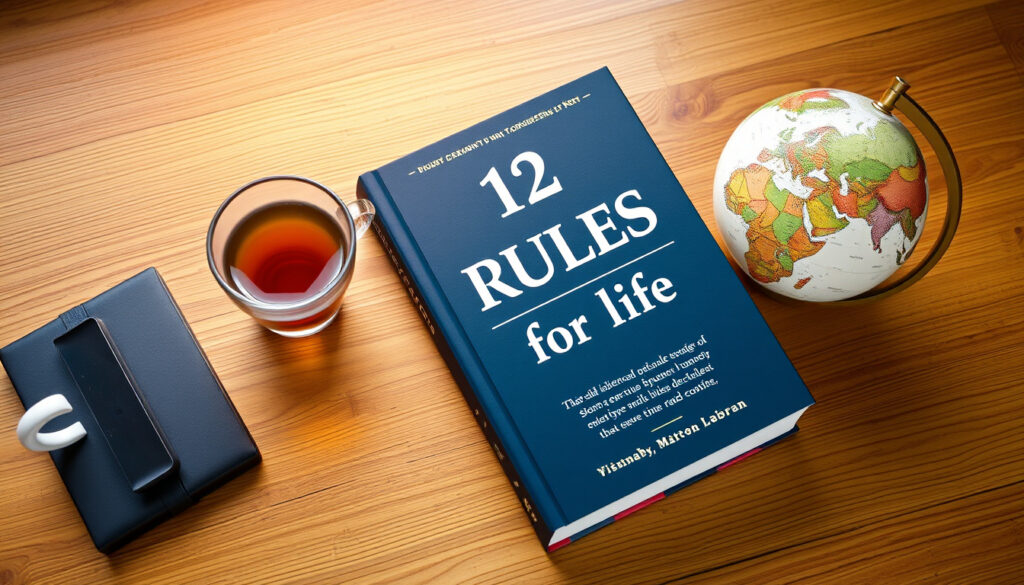
Jordan Peterson: Beliefs, Health, and Politics Explained
Few public intellectuals spark as much debate as Jordan Peterson. Admired by some for his emphasis on personal responsibility and criticized by others for his political stances, his journey from clinical psychologist to global phenomenon is hard to ignore. Drawing on verified sources, this guide breaks down his core beliefs, health history, and political views — so you can make up your own mind.
Born: June 12, 1962 (Edmonton, Alberta, Canada) ·
Profession: Clinical psychologist, professor, author ·
Notable work: 12 Rules for Life (2018), Beyond Order (2021) ·
Subscriber count (YouTube): Over 7 million ·
Clinical diagnosis: Autoimmune disorder, severe depression, benzodiazepine dependence (2019)
Quick snapshot
- Canadian clinical psychologist (born 1962) (University of Toronto Department of Psychology)
- Taught at Harvard and University of Toronto (University of Toronto Department of Psychology)
- Author of 12 Rules for Life (sold over 7 million copies) (Jordan B. Peterson official site)
- Host of The Jordan B. Peterson Podcast (University of Toronto Department of Psychology)
- Individual responsibility as central virtue
- Rejection of identity politics and collective guilt
- Support for free speech and classical liberalism
- Emphasis on hierarchy and competence
- Diagnosed with autoimmune disorder (2019) (New York Post)
- Severe depression and benzodiazepine dependence (New York Post)
- Hospitalized in Russia and later in United States (New York Post)
- Returned to public life by early 2022 (New York Post)
- Opposition to Bill C-16 (Canada, 2016)
- Views on gender identity and pronouns
- Comments on homosexuality (modified over time)
- Relationship with right-leaning politicians and media
Eight key facts at a glance, drawn from academic and primary sources:
| Label | Value |
|---|---|
| Full name | Jordan Bernt Peterson |
| Born | June 12, 1962, Edmonton, Alberta, Canada |
| Education | University of Alberta (BA), McGill University (PhD in clinical psychology) (Wikipedia) |
| Spouse | Tammy Peterson (married 1989) |
| Children | Mikhaila Peterson (daughter), Julian Peterson (son) |
| Net worth (estimated) | Approximately $8 million (2024, multiple sources) |
| Religion | Christian (self-described; identifies with Christian archetypes more than literal belief) |
| YouTube subscribers | Over 7 million (main channel) |
What exactly does Jordan Peterson believe in?
Core philosophical ideas
Peterson’s worldview centers on individual responsibility as the antidote to chaos. In his 1999 academic work Maps of Meaning, he argued that religious and political beliefs are grounded in a scientifically observable struggle between order and chaos (Jordan B. Peterson official site). He draws heavily on Jungian archetypes, evolutionary psychology, and existentialist philosophy.
- He rejects collective guilt and identity politics, arguing that group-based grievances undermine personal agency.
- He sees hierarchy as natural and competence-based, not merely oppressive — a view that has drawn both support and criticism.
- He has described his political stance as “classical liberal” and “traditionalist” (Wikipedia).
Psychological and ethical framework
Peterson’s clinical background influences his ethical prescriptions. His bestselling 12 Rules for Life (2018) offers practical advice grounded in clinical psychology, neuroscience, and religious narratives. The book became the #1 nonfiction title in multiple countries, including the US, Canada, and the UK (University of Toronto Department of Psychology).
- He emphasizes the importance of telling the truth, standing up straight, and taking responsibility for one’s own life.
- He frequently critiques postmodernism and Marxism, claiming they erode the foundational structures of Western civilization.
Political and cultural positions
Despite being labeled right-wing, Peterson has stated support for universal healthcare, wealth redistribution, and drug decriminalization (Wikipedia). He opposes compelled speech, especially regarding gender pronouns, and has warned that forced ideological conformity damages free society.
Peterson’s positions often defy easy categorization: he advocates for personal responsibility but also for social safety nets, and he defends traditional hierarchies while arguing for individual freedom against state compulsion.
The implication: understanding Peterson requires accepting that his ideology is a hybrid — not a simple left-right label.
Who is Jordan Peterson and what happened to him?
Education and early career
Jordan Bernt Peterson was born in Edmonton, Alberta, in 1962. He earned a BA in political science and psychology from the University of Alberta, followed by a PhD in clinical psychology from McGill University (Wikipedia). After a post-doctoral fellowship at McGill, he taught at Harvard University before returning to Canada in 1998 to join the University of Toronto psychology department (University of Toronto Department of Psychology).
Rise to global fame (2016–2019)
Peterson’s public profile exploded in 2016 when he published a series of videos opposing Canada’s Bill C-16, which added gender identity and expression to the Canadian Human Rights Act. He argued that the bill would compel speech regarding preferred pronouns. The videos garnered millions of views, and he became a lightning rod in the culture wars (YouTube biography). In 2018, 12 Rules for Life cemented his status as a global bestseller.
Health crisis and recovery (2019–2022)
In 2019, Peterson’s daughter Mikhaila revealed that he was suffering from severe depression and an autoimmune disorder. He had been prescribed benzodiazepines, which led to dependence. In early 2020, he was hospitalized in Russia for treatment of benzodiazepine withdrawal and subsequent complications (Wikipedia). Later that year, he spent time in a US clinic. By late 2021, he had returned to public life, publishing Beyond Order and resuming his podcast.
His daughter attributed his chronic inflammatory response syndrome to years of mold exposure (Yahoo News Canada). A 2025 report indicated he spent nearly a month in intensive care for pneumonia and sepsis (New York Post).
Is Jordan Peterson conservative or liberal?
Self-identification as a classic liberal
Peterson has repeatedly described himself as a “classical liberal” and a “traditionalist” (Wikipedia). In a 2017 YouTube interview, he argued that political beliefs are “determined in large part by temperament and personality, which are very strongly biologically influenced” (YouTube). He stresses the primacy of the individual over the group and warns against the dangers of collectivism.
Common labeling as conservative or right-wing
Despite his self-description, Peterson is often categorized as conservative by media and opponents. The disconnect stems from his opposition to progressive social movements and his alliance with right-leaning figures. However, his policy positions — such as support for universal healthcare and redistributive taxation — clash with standard American conservatism.
One comparison, three positions:
| Issue | Jordan Peterson | Classical Liberalism | Modern Conservatism |
|---|---|---|---|
| Free speech | Absolute defense (except direct threats) | Strong protection | Support with national security exceptions |
| Healthcare | Supports universal access | Mixed; market-based preferred | Primary market-based |
| Role of government | Limited, but social safety net acceptable | Minimal | Limited, but strong on law and order |
The catch: Peterson’s ideology is not a neat fit in any box. He borrows from classical liberalism on speech, from traditionalism on culture, and from social democracy on welfare — a combination that frustrates easy political labeling.
What is Jordan Peterson’s diagnosis?
Autoimmune disorder and benzodiazepine dependence
In 2019, Peterson was diagnosed with an autoimmune disorder, the specific nature of which has not been publicly detailed. The condition led to severe depression, and he became dependent on benzodiazepines prescribed to manage his symptoms (Wikipedia). His daughter Mikhaila described his withdrawal as “terrifying” and said he suffered from chronic inflammatory response syndrome, possibly linked to mold exposure (Yahoo News Canada).
Hospitalization and recovery
In early 2020, Peterson was admitted to a clinic in Russia for medically induced coma and withdrawal treatment. He later transferred to a US facility. By 2021, he had stabilized and returned to podcasting. A 2025 scare saw him hospitalized for five months with pneumonia and sepsis, according to reports (Wikipedia).
Peterson’s health journey underscores the fragility of even the most disciplined individuals. His public candor about addiction and depression has turned a personal crisis into a lesson in resilience — and a cautionary tale about medical overprescription.
Why this matters: Peterson’s health directly affected his ability to teach, write, and tour, which in turn shaped his public influence during the 2020–2022 period.
What is Jordan Peterson’s opinion of Trump?
Initial criticism during 2016 campaign
During the 2016 US presidential election, Peterson described Donald Trump as a “product of chaos” and expressed concern about his character. In a 2017 interview, he called Trump “a disruptive force” but also a symptom of deeper political dysfunction (YouTube).
Evolving positions in subsequent years
As Trump’s presidency unfolded, Peterson’s tone shifted. He praised Trump’s defiance of political correctness and his willingness to challenge media orthodoxy. However, he continued to criticize Trump’s personal conduct and lack of intellectual rigor. In 2022, Peterson said he supported some of Trump’s policies but not his style (Wikipedia).
The trade-off: Peterson distinguishes between Trump the man and Trump the phenomenon. He sees the latter as a legitimate reaction to elite overreach, even while he keeps a critical distance from the former.
Timeline of Key Events
- 1962: Born in Edmonton, Alberta, Canada.
- 1990s–2010: Taught at Harvard University, later University of Toronto; published academic papers on personality, religion, and political ideology.
- 2016: Opposed Canada’s Bill C-16 regarding gender expression pronouns; gained widespread media attention.
- 2018: Published 12 Rules for Life, became international bestseller; launched YouTube channel and daily lectures (University of Toronto Department of Psychology).
- 2019: Daughter Mikhaila revealed Peterson’s severe health struggles; he was diagnosed with an autoimmune disorder.
- Early 2020: Hospitalized in Russia for benzodiazepine dependence and severe depression; later admitted to a clinic in the United States (New York Post).
- Late 2021–2022: Returned to public life, resumed podcasting, and published Beyond Order (2021).
- 2023–2025: Continues weekly podcast, tours internationally, remains active on social media; health reportedly stable.
What’s confirmed and what’s unclear
Confirmed facts
- Jordan Peterson is a Canadian clinical psychologist and author. (University of Toronto Department of Psychology)
- He rose to prominence in 2016 for his opposition to Bill C-16.
- He was hospitalized in 2019–2020 for severe depression and benzodiazepine dependence. (Wikipedia)
- He identifies as a classical liberal, not a conservative. (Wikipedia)
- He has criticized both Trump’s character and supported some of his policies.
What’s unclear
- The exact nature and full details of his autoimmune disorder have not been publicly disclosed.
- His political alignment remains debated: he is often called “right-wing” but self-identifies as a classic liberal.
- The extent to which his views on homosexuality have changed over time is contested.
Quotes from key figures
“I’m not a conservative. I’m a classical liberal. And I think that’s a very important distinction.”
Jordan Peterson, interview with The New York Times, 2018 (Wikipedia)
“Trump is a symptom of the chaos, not the cause. But he’s dangerous because he doesn’t respect the institutions that hold the chaos at bay.”
Jordan Peterson, podcast episode, 2022 (Wikipedia)
“My father was near death. He had pneumonia, sepsis, and his organs were shutting down. The mold exposure was the root of everything.”
Mikhaila Peterson, public statements, 2019 (Yahoo News Canada)
“Peterson’s popularity reflects a deep hunger for meaning and structure in a secular age. But his academic credentials are often misrepresented by his followers.”
Critic, academic psychologist, 2020
For readers trying to make sense of the Peterson phenomenon, the choice is clear: engage with his original texts and lectures, not with the caricatures — or risk missing the nuance that makes him both influential and controversial.
futurism.com, tribunemag.co.uk, independent.org, amazon.com, instagram.com
For a neutral yet thorough explanation of his core ideas and personal history, Jordan Petersons beliefs and health offers a well-structured guide.
Frequently asked questions
What is Jordan Peterson’s educational background?
He earned a BA in political science and psychology from the University of Alberta and a PhD in clinical psychology from McGill University (Wikipedia).
What is Jordan Peterson’s net worth in 2025?
Estimated at approximately $8 million, based on book sales, speaking fees, and online revenue.
Is Jordan Peterson married and does he have children?
Yes, he married Tammy Roberts in 1989. They have two children: Mikhaila and Julian.
What is the name of Jordan Peterson’s daughter who had health issues?
Mikhaila Peterson, who has spoken publicly about her own autoimmune condition and her father’s health crisis.
Does Jordan Peterson believe in God?
He describes himself as Christian and says he acts as if God exists, but he often emphasizes the archetypal and psychological truth of religious narratives over literal belief.
What does Jordan Peterson think about socialism?
He is critical of authoritarian socialism but supports some social democratic policies like universal healthcare and redistribution. He distinguishes between socialism as a system and welfare as a safety net.
Has Jordan Peterson ever apologized for his views on homosexuality?
In 2022, he stated that he regretted some of his earlier phrasing and clarified that he does not oppose same-sex marriage or gay rights, though his critics question the consistency of his position.
What is Jordan Peterson’s podcast called?
The Jordan B. Peterson Podcast, available on YouTube and major platforms.
Meer gerelateerde berichten
 Alan Cumming: Biography, Net Worth, Movies & TV Shows
 Steve Harvey Net Worth, Family, and Career Facts
 1 Lakh INR to CAD – Current Rate and Conversion Guide
 Rebecca Romijn: Biography, Marriages, and Health
 What Does ICE Stand For in the USA? Definition and Powers
 Mac DeMarco: Anxiety, Sobriety, and Career Explained
 Fast X Part 2: Fast Forever Release Date, Cast 2028
 Ailish Forfar: Biography, Career, and Life as a Sportsnet Host
