Guru Nanak Dev Ji Birthday 2025 – Date, History, Celebrations
Guru Nanak Jayanti 2025, also known as Gurpurab or Guru Nanak Prakash Utsav, marks the 556th birth anniversary of Guru Nanak Dev Ji, the founder of Sikhism. The celebration falls on November 5, 2025, coinciding with Kartik Purnima in the Hindu lunar calendar. Devotees across India and worldwide Sikh communities prepare to honor his legacy of equality, peace, and devotion to one God.
The festival brings together centuries-old traditions, from the continuous recitation of the Guru Granth Sahib to grand processions through city streets. Families gather in gurdwaras decorated with lights and flowers, sharing meals at community kitchens that embody the teachings of selfless service. The occasion serves as both a religious observance and a reminder of Guru Nanak’s universal message that transcends all boundaries.
Understanding the significance, traditions, and scheduled events for Guru Nanak Jayanti 2025 helps devotees and those curious about Sikh culture prepare for this meaningful celebration. The date follows the lunar calendar and aligns with the Nanakshahi calendar used by Sikh institutions, creating a rich tapestry of spiritual observance that connects millions across generations.
When Is Guru Nanak Jayanti 2025?
Guru Nanak Jayanti 2025 falls on Wednesday, November 5, 2025. The celebration marks the 556th birth anniversary of Guru Nanak Dev Ji, the first Guru of Sikhism who founded the religion in the 15th century. The festival aligns with Kartik Purnima, the full moon day of the Hindu lunar month of Kartik, which typically falls between October and November.
November 5, 2025
556th birth anniversary of Sikhism’s founder
Akhand Path, Nagar Kirtan, Langar
Sikh communities worldwide
Calendar Details and Auspicious Timings
The Purnima tithi begins on November 4, 2025, at 12:06 PM and concludes on November 5, 2025, at 8:18 AM. According to Drik Panchang, the auspicious timings for the day include Pratah Sandhya from 5:18 AM to 6:36 AM, and Vijaya Muhurat from 1:54 PM to 2:38 PM. These windows are considered favorable for prayers and religious observances during the celebration.
- The date follows the lunar calendar and varies yearly, depending on moon phases
- The Nanakshahi calendar provides a fixed date for Sikh religious observances
- Kartik Purnima marks the full moon in the Hindu month of Kartik
- Traditional calculation methods determine the precise tithi for celebrations
- Gurdwaras across India and abroad coordinate based on these calendar determinations
| Fact | Details |
|---|---|
| Birth Year | 1469 |
| Birthplace | Talwandi (now Nankana Sahib, Pakistan) |
| Calendar Used | Nanakshahi Calendar |
| 2025 Date | November 5 |
| Anniversary | 556th |
| Celebration Duration | Three days typically |
| Lunar Month | Kartik (Purnima) |
| Key Scripture | Guru Granth Sahib |
Who Was Guru Nanak Dev Ji?
Guru Nanak Dev Ji was born in 1469 in Talwandi, a town that now lies in Nankana Sahib, Pakistan. His birth marks the foundation of Sikhism, a religion that would grow to millions of adherents worldwide. From an early age, Guru Nanak displayed a questioning mind and a deep sense of spirituality that set him apart from conventional expectations of his time and social position.
His teachings centered on the belief in one universal God, rejecting the caste system and religious divisions that plagued society. The famous declaration attributed to him states, “There is no Hindu, there is no Muslim; all are children of one God.” This radical message of equality resonated across communities and continues to define Sikh philosophy today. Guru Nanak traveled extensively throughout his life, spreading his teachings across Asia and establishing communities based on his spiritual principles.
The Life and Legacy of Sikhism’s Founder
Guru Nanak Dev Ji passed away in 1539, leaving behind a profound spiritual legacy that would shape the lives of countless followers. His life emphasized four core values: equality, compassion, honesty, and selfless service, which became the foundational pillars of Sikhism. These principles manifest in the religion’s traditions, including the community kitchen concept called langar, where people of all backgrounds share meals together regardless of social standing.
Guru Nanak Dev Ji established 52 religious settlements called Sikh Sangat across Asia during his missionary journeys. His teachings were later compiled into the Guru Granth Sahib, the holy scripture that guides Sikh practice and spirituality.
The establishment of these communities created networks of support and spiritual learning that endure to this day. Guru Nanak appointed a successor to continue his teachings, beginning the tradition of lineally transmitted Gurus that would eventually culminate in the Guru Granth Sahib becoming the eternal Guru of Sikhism. His influence extends far beyond religious practice, inspiring social movements centered on justice, equality, and community service.
Teachings That Shaped a Faith
The core message of Guru Nanak’s teachings can be summarized in three principles: live truthfully, share with others, and remember the divine. These straightforward directives have guided generations of Sikhs through daily life, providing a moral framework that emphasizes personal responsibility and community welfare. His poetry and hymns, preserved in the Guru Granth Sahib, continue to provide spiritual nourishment and ethical guidance for millions worldwide.
How Is Guru Nanak Jayanti Celebrated?
Guru Nanak Jayanti celebrations unfold over three days, with the most intense observances occurring in regions with significant Sikh populations. Communities across India, particularly in Punjab, Delhi, Haryana, and Maharashtra, come alive with devotional activities. Global Sikh communities from Canada to Australia participate in parallel observances that maintain traditional practices while adapting to local contexts.
The festivities combine spiritual devotion with communal celebration, creating an atmosphere of reverence and joy. Gurdwaras receive meticulous decoration with flowers, lights, and traditional ornaments that create a visually stunning backdrop for prayers and gatherings. The sounds of kirtan, devotional hymns, fill the air throughout the celebration period, drawing worshippers into a spirit of contemplation and gratitude.
Traditional Rituals and Practices
The Akhand Path marks the beginning of the celebration, involving a 48-hour continuous reading of the Guru Granth Sahib that starts two days before the main festival day. This unbroken recitation creates a continuous spiritual presence and allows devotees to participate in the sacred reading at various times throughout the observance. Trained reciters maintain the tradition, ensuring the proper pronunciation and musical rendering of the hymns.
- Prabhat Pheri: Early morning hymn-singing processions through neighborhoods that gather the community for collective worship
- Nagar Kirtan: Grand processions led by Panj Pyare (Five Beloved Ones), featuring kirtan, Gatka martial arts displays, and religious chants
- Langar: Community kitchen meals served to all visitors regardless of background or ability to contribute
- Special Prayers: Congregational prayers at gurdwaras with readings from Guru Granth Sahib
The Nagar Kirtan procession, typically held the day before the main celebration, represents one of the most spectacular elements of the festival. Led by the Panj Pyare, the procession winds through city streets adorned with decorations, with devotees lining the route to receive blessings and participate in the singing of hymns. Gatka performers demonstrate traditional martial arts, symbolizing the spiritual warriors who defend the faith.
Major Celebration Venues
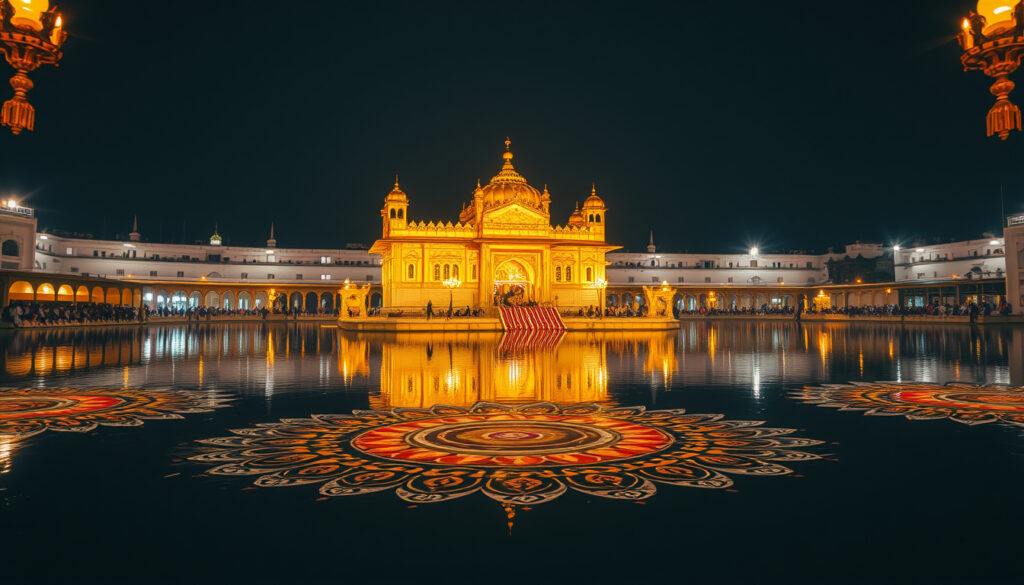
The Golden Temple in Amritsar serves as the spiritual center for Guru Nanak Jayanti celebrations, drawing hundreds of thousands of visitors during the festival period. The temple’s pool, surrounded by marble pathways and illuminated at night, provides a breathtaking setting for the special prayers and kirtan programs. Gurdwara Bangla Sahib in Delhi hosts significant observances as well, with its iconic dome visible from the capital’s streets.
Nankana Sahib in Pakistan, Guru Nanak’s birthplace, has become an increasingly significant pilgrimage site in recent years. The gurdwara complex there undergoes extensive preparation ahead of the celebration, welcoming Sikh visitors from around the world who make the journey to honor the founder of their faith. These major venues coordinate their celebrations with local communities to ensure a unified observance of the sacred day.
Gurdwaras typically begin their preparations weeks in advance, coordinating volunteer schedules for langar preparation, decoration setup, and security arrangements. Visitors to major gurdwaras during Guru Nanak Jayanti should expect large crowds and plan accordingly for parking, entry timing, and accommodation if traveling from distant locations.
Key Teachings and Wishes for 2025
Guru Nanak’s teachings remain profoundly relevant in contemporary society, offering guidance on equality, spirituality, and ethical living. The key principles he established continue to shape Sikh identity and provide moral direction for millions of practitioners. During Guru Nanak Jayanti 2025, devotees reflect on these teachings and consider how to apply them in their daily lives.
The four cardinal principles of Sikhism emerge directly from Guru Nanak’s life and teachings. Equality demands that all humans be treated with dignity regardless of caste, creed, gender, or social status. One God represents universal devotion that transcends religious boundaries and recognizes the divine in all creation. Honesty requires truthful living in thought, word, and deed. Selfless service, or seva, involves contributing to the welfare of others without expectation of reward.
The Message of Unity and Service
The rejection of social divisions stands as one of Guru Nanak’s most radical contributions to religious thought. In a society rigidly divided by caste, his assertion that all people are children of one God challenged the fundamental structures of his time. This message continues to inspire movements for social justice and equality within and beyond Sikh communities. Langar traditions embody this principle, as people from all backgrounds sit together and share the same meal without distinction.
- Equality: All humans are equal regardless of caste, creed, race, gender, or economic status
- One God: Universal devotion to the divine that transcends religious boundaries
- Honesty: Truthful living in every aspect of life, avoiding deception and deceit
- Seva: Selfless service to others, particularly those in need
- Compassion: Showing empathy and care for all living beings
- Community: Supporting the collective welfare of the Sangat (spiritual community)
While specific official wishes and messages for Guru Nanak Jayanti 2025 from the Shiromani Gurdwara Parbandhak Committee (SGPC) were not publicly available at the time of research, traditional greetings typically invoke peace and Guru Nanak’s teachings. Devotees commonly share messages emphasizing his universal message of love, equality, and service to humanity. These greetings serve as reminders of the spiritual significance of the day and reinforce the values he championed.
SGPC typically oversees major events at the Golden Temple, including special programs, live streaming of celebrations, and coordination of volunteer services. Official announcements regarding specific 2025 programs had not been published at the time sources were reviewed. Devotees are encouraged to check with local gurdwaras for programs specific to their communities.
The Life of Guru Nanak Dev Ji: A Timeline
Understanding the chronology of Guru Nanak’s life provides context for the celebration of his birth anniversary. His journey from ordinary birth in a small town to becoming the founder of a major world religion encompasses spiritual awakening, extensive travels, and the establishment of enduring institutions that continue to serve his followers.
- 1469: Birth of Guru Nanak Dev Ji in Talwandi (now Nankana Sahib, Pakistan)
- 1479: Marries Sulakhani, begins family life while continuing spiritual pursuits
- 1499: Experiences spiritual enlightenment at the Bein River, begins public ministry
- 1500-1520: Undertakes Udasi (spiritual journeys) across Asia, spreading teachings
- 1520: Establishes the concept of Sangat (holy congregation) and community kitchen
- 1539: Passes away in Kartarpur, passing his mission to successor Guru Angad Dev Ji
- 1700s: Compilation of Guru Granth Sahib finalized as the eternal Guru of Sikhism
- 2025: Celebration of the 556th birth anniversary worldwide
Date Certainty and Calendar Considerations
The date of Guru Nanak Jayanti illustrates the intersection of two calendar systems: the lunar-based Hindu calendar and the Nanakshahi calendar adopted by Sikh institutions. Understanding this intersection clarifies why different sources may reference different dates for the celebration.
| Established Information | Uncertain Areas |
|---|---|
| November 5, 2025 is the primary celebration date | Minor variations may exist in some local traditions |
| Purnima tithi timing confirmed by Drik Panchang | Specific SGPC program details for 2025 not yet published |
| Kartik Purnima falls in October-November period | Local celebration schedules vary by gurdwara |
| Auspicious timings per traditional calculations | Availability of live streaming details for specific gurdwaras |
The Nanakshahi calendar, introduced in 2003, provides a fixed solar calendar for Sikh religious observances, reducing the annual variation caused by lunar calendar calculations. However, traditional lunar calculations continue to influence local observances and community practices. This dual calendar approach creates a rich tradition that honors both historical calculation methods and the need for consistent date observance.
The Significance of Guru Nanak Jayanti Today
Guru Nanak Jayanti continues to hold profound significance for Sikh communities worldwide, serving as both a religious observance and a celebration of values that resonate beyond the faith. The day commemorates not merely the birth of a historical figure but the enduring presence of teachings that address fundamental questions of human existence, social organization, and spiritual practice.
In contemporary society, the message of equality and rejection of division takes on renewed relevance. Guru Nanak’s assertion that all humans share a common origin and divine nature provides philosophical grounding for efforts toward social harmony and justice. The celebration brings communities together, strengthening bonds of shared faith and mutual support that extend throughout the year.
The emphasis on selfless service during Guru Nanak Jayanti manifests in increased volunteer activity and charitable giving during the festival period. Langar preparations expand, community cleanups organize, and various service initiatives launch in honor of the occasion. These activities embody the practical application of Guru Nanak’s teachings, transforming abstract principles into concrete community benefit.
Sources and References
The information presented draws from multiple sources providing comprehensive coverage of Guru Nanak Jayanti 2025, including calendar calculations, historical context, and celebration details. These sources range from religious authority websites to news publications and reference encyclopedias.
There is no Hindu, there is no Muslim; all are children of one God. So whose servants shall we be? We shall be the servants of God alone.
— Guru Nanak Dev Ji, Guru Granth Sahib
Additional sources include detailed coverage of the lunar calendar calculations determining the 2025 date, historical accounts of Guru Nanak’s life and teachings, and practical guides for celebration preparation. Reference materials from established encyclopedias provide authoritative biographical information, while news sources offer contemporary coverage of celebration preparations and events.
Summary
Guru Nanak Jayanti 2025 falls on November 5, marking the 556th birth anniversary of Guru Nanak Dev Ji, the founder of Sikhism. The celebration aligns with Kartik Purnima and follows traditional lunar calendar calculations as well as the Nanakshahi calendar used by Sikh institutions. Festivities span three days, featuring Akhand Path, Nagar Kirtan processions, Prabhat Pheri, and community langar meals at gurdwaras worldwide.
Guru Nanak’s teachings emphasizing equality, one God, honesty, and selfless service continue to guide millions of Sikhs in their spiritual practice and daily conduct. The celebration provides an opportunity for reflection on these principles and their application in contemporary life. Major observances occur at the Golden Temple in Amritsar, Gurdwara Bangla Sahib in Delhi, and Nankana Sahib in Pakistan, drawing pilgrims from around the world.
For those interested in religious observances and cultural celebrations, understanding the significance and timing of Guru Nanak Jayanti provides valuable insight into Sikh traditions and values. The festival exemplifies the enduring power of spiritual teachings to unite communities across generations and geographies. Related celebrations like Ramadan and other religious observances demonstrate the diverse ways communities worldwide honor spiritual traditions and principles.
Is Guru Nanak Jayanti on the same date every year?
No, the date varies yearly because it follows the lunar calendar. It falls on Kartik Purnima, the full moon in the Hindu month of Kartik, which typically occurs between October and November. The Nanakshahi calendar provides a more consistent date for official Sikh observances.
What are traditional foods served during Gurpurab?
Langar typically includes vegetarian dishes such as dal (lentils), sabzi (vegetables), roti (bread), and rice. Karah prasad, a sweet preparation made from ghee, sugar, and flour, holds special significance and is distributed as blessed food after prayers.
How should one greet someone on Guru Nanak Jayanti?
Common greetings include “Gurpurab di lakh lakh vaadi hai” (congratulations on the ten lakh blessings) or “Happy Guru Nanak Jayanti.” Many share messages emphasizing peace, equality, and Guru Nanak’s teachings. Traditional greetings often invoke his universal message of harmony.
Which calendar determines the official Guru Nanak Jayanti date?
Both the Hindu lunar calendar and the Nanakshahi calendar influence the date. The Nanakshahi calendar provides a fixed solar date, while lunar calculations based on Kartik Purnima traditionally determine the celebration. Major Sikh institutions typically recognize the Nanakshahi calendar date.
Where are the major Guru Nanak Jayanti 2025 celebrations?
Major celebrations occur at the Golden Temple in Amritsar, Gurdwara Bangla Sahib in Delhi, and Nankana Sahib in Pakistan. Gurdwaras in Punjab, Haryana, Maharashtra, and throughout the Indian subcontinent host significant observances. Sikh communities worldwide hold local celebrations.
What is Akhand Path?
Akhand Path refers to the unbroken, continuous reading of the Guru Granth Sahib over 48 hours. This practice typically begins two days before Guru Nanak Jayanti and allows devotees to participate in the sacred recitation throughout the observance period.
Can non-Sikhs attend Guru Nanak Jayanti celebrations?
Yes, gurdwaras generally welcome visitors of all faiths to observe Guru Nanak Jayanti celebrations. Visitors should dress modestly, cover their heads, and remove shoes before entering the prayer hall. Participating in langar and attending kirtan programs are typically open to all.
Meer gerelateerde berichten
 4 Ounces in Grams: 113g Exact Conversion & Baking Guide
 Maison A Vendre Charlesbourg – Listings Prices and Trends 2025
 TSX Index Live: S&P/TSX Composite Price, Chart & News
 Pretty Little Liars Original Sin – Complete Plot Cast Seasons Guide
 Rob Thomas: Wife’s Health, Biggest Hit & Sobriety Journey
 Canada Dental Plan Application 2025: Step-by-Step Guide
 What Did P Diddy Do? Trial Verdict & Charges Explained
 Demitra Kalogeras: Age, Height, Parents, and Biography
