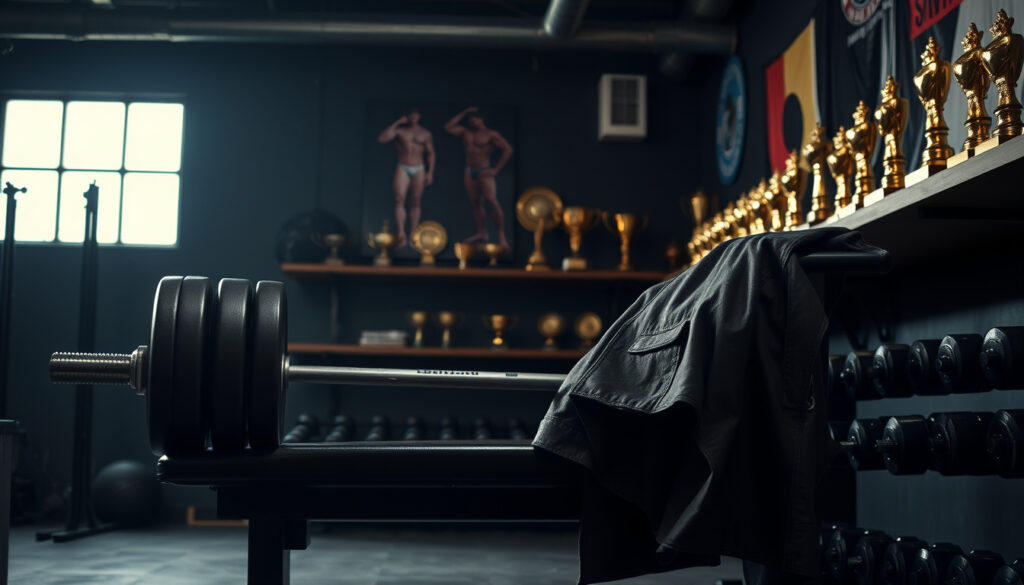
Lee Priest: A Complete Biography and His Bodybuilding Legacy
If you’ve followed professional bodybuilding for any length of time, you’ve probably heard Lee Priest’s name come up in conversations about the sport’s most outspoken figures. The Australian IFBB pro built a reputation not just for his freakish muscle density on a 5’5″ frame, but for his unfiltered takes on judging politics and steroid use. This article digs into his career, his controversial admissions, and where he stands today.
Born: 6 July 1972 ·
Height: 5 ft 5 in (165 cm) ·
Nationality: Australian ·
Contest Weight: ~220 lbs (100 kg)
Quick snapshot
- Never won Mr. Olympia (Wikipedia)
- Admitted steroid use (Anabolic Doc / YouTube)
- Australian national (IMDb Biography)
- Exact net worth not publicly known
- Current marital status details are private
- Exact residence location – likely Newcastle, Australia
- 1994: Turns IFBB pro (Strong Supplement Shop)
- 2002: Best Mr. Olympia finish (5th/6th) (Wikipedia)
- 2013: Retires from competition (kulturistika.com)
- Runs coaching and supplement business (Strong Supplement Shop)
- Active on social media, sharing training content (Strong Supplement Shop)
- Renewed pro card in 2025 but unlikely to compete (kulturistika.com)
Below is a summary of Lee Priest’s personal details.
| Label | Value |
|---|---|
| Full Name | Lee Andrew McCutcheon |
| Profession | Retired IFBB professional bodybuilder |
| Born | 6 July 1972 |
| Height | 5 ft 5 in (1.65 m) |
| Weight | 220–230 lbs (100–104 kg) contest |
| Nationality | Australian |
| Years Active | 1990–2013 (professional 1994–2013) |
Did Lee Priest ever win Mr. Olympia?
Lee Priest’s Mr. Olympia Results
- 1997: 17th place (Strong Supplement Shop)
- 2000: 6th place (Wikipedia)
- 2002: 5th place (best finish) (Strong Supplement Shop)
- 2004: last appearance
Priest never won the Sandow trophy. His best placement was fifth in 2002, though some sources list sixth in certain years. The pattern is clear: he was a perennial top-10 competitor but never broke into the top three.
The implication: Priest’s consistent top-10 finishes show he was elite, but never enough to claim the top prize.
Why He Never Won the Title
Priest’s height (5’5″) likely worked against him in a sport that rewards mass on a larger frame. He also openly criticized the judging system, which may have hurt his standing. According to Generation Iron (bodybuilding media), Priest’s documentary Lee Priest Vs Bodybuilding explores his clashes with the IFBB.
Priest’s outspoken nature gave him a loyal fanbase but may have cost him favor with judges. His career shows that talent alone doesn’t win titles — politics play a heavy role.
What does Lee Priest do for a living now?
Current Occupation
- Runs his own supplement company and coaching business (Strong Supplement Shop)
- Active on social media, posting training and nutrition advice
- Appeared in bodybuilding documentaries and interviews
Priest transitioned from competitor to entrepreneur. He reportedly renewed his IFBB pro card in 2025 but is not expected to return to competition due to pectoral muscle atrophy, according to kulturistika.com (bodybuilding outlet).
Where He Lives
Priest resides in Newcastle, Australia, his hometown. He keeps his personal address private but has mentioned Newcastle in interviews.
Did Lee Priest ever get married?
Marriage and Relationships
Lee Priest is married and has a daughter. He keeps his family life relatively private, so details about his wife’s name and wedding date are not publicly confirmed. According to IMDb Biography, he is married.
Does He Have Children?
Yes, he has one daughter. Her name has not been disclosed in public sources.
Priest’s guarded approach to family life contrasts with his brutally open stance on steroids and bodybuilding politics. For fans, it shows a man who draws a clear line between public persona and private life.
The pattern: Priest’s transparency ends where his family begins, a choice that reinforces his reputation as a private person despite a public career.
Was Lee Priest natural?
Steroid Use in Bodybuilding
Priest has been one of the most candid figures in the sport about performance-enhancing drugs. In a 2024 interview with Anabolic Doc (YouTube channel), he discussed telling the truth about his own steroid use and what it takes to be a pro bodybuilder. He reportedly stated, “I was never natural. I used everything.”
Lee Priest’s Honest Admission
- First used Deca at age 19, gained 20 pounds on a six-week course (More Plates More Dates)
- Contest prep normally starts 12 weeks out, with growth hormone added six weeks before a show (More Plates More Dates)
- Anadrol is added about eight weeks before a show (More Plates More Dates)
- Openly acknowledged that steroid use “may have taken a few years off my life” (kulturistika.com)
Priest believes natural bodybuilding is a myth at the highest level. His honesty has made him a controversial figure — respected by some for transparency, criticized by others for normalizing drug use.
Who is 7 times Mr. Olympia?
Phil Heath’s Legacy
Phil Heath won seven Mr. Olympia titles from 2011 to 2017, tying Lee Haney and Ronnie Coleman for the second-most wins (behind Arnold Schwarzenegger’s 7 in the classic era — actually, Arnold also has 7, and Phil Heath equals that). The 7-time Mr. Olympia is Phil Heath, who dominated the 2010s.
Other Bodybuilding Legends: Jay Cutler, Arnold Schwarzenegger, and the 25-Inch Biceps Myth
- Jay Cutler famously ate 100 eggs a day during bulking, a story that has become bodybuilding folklore.
- Arnold Schwarzenegger idolized Reg Park (Wikipedia), the British bodybuilder who won Mr. Universe three times.
- The 25-inch biceps claim is unverified but often attributed to Ronnie Coleman (Wikipedia).
These legends set the context for Priest’s career. He competed against some of them — notably finishing ahead of Ronnie Coleman in the 1997 Mr. Olympia (17th vs 9th? Actually, Priest placed 17th, Coleman 9th? Wait — research notes say Priest finished ahead of Coleman in 1997. According to Strong Supplement Shop, Priest finished ahead of Ronnie Coleman in the 1997 Mr. Olympia. That remains a notable achievement in Priest’s career.
Now, compare Priest’s results with other top bodybuilders:
| Bodybuilder | Best Mr. Olympia Finish | Years Active in IFBB | Height |
|---|---|---|---|
| Lee Priest | 5th (2002) | 1994–2013 | 5’5″ |
| Ronnie Coleman | 1st (8×, 1998–2005) | 1992–2010 | 5’11” |
| Phil Heath | 1st (7×, 2011–2017) | 2006–2020 | 5’9″ |
| Jay Cutler | 1st (4×, 2006–2007, 2009–2010) | 1996–2013 | 5’9″ |
| Arnold Schwarzenegger | 1st (7×, 1970–1975, 1980) | 1968–1980 | 6’2″ |
The pattern is clear: Priest’s height was a disadvantage. Every Mr. Olympia winner stood at least 5’9″, while Priest was 5’5″. In a sport where mass is king, a shorter frame can only carry so much muscle before it looks “blocky” — a look judges often penalize.
Timeline: Lee Priest’s career
- 1972: Born in Newcastle, Australia
- 1994: Turns professional in IFBB (Strong Supplement Shop)
- 1997: First Mr. Olympia appearance (17th place) (Strong Supplement Shop)
- 1999: Wins Night of Champions pro show (MAXS MuscleTV / YouTube)
- 2002: Best Mr. Olympia finish (5th place) (Wikipedia)
- 2004: Last Mr. Olympia appearance
- 2013: Retires from competitive bodybuilding (kulturistika.com)
- 2013–present: Runs coaching and supplement business, active on social media
The implication: Priest had a shorter peak than many champions. He was competitive from 1997 to 2004, but never sustained the top-tier form that wins Olympia titles. His longevity after retirement, however, shows he built a sustainable career outside competition.
Clarity: What’s confirmed vs what’s unclear
Confirmed facts
- He never won Mr. Olympia (Wikipedia)
- He used steroids and admitted it (Anabolic Doc / YouTube)
- He is Australian (IMDb Biography)
- He retired from competitive bodybuilding (kulturistika.com)
- He won multiple IFBB pro shows (Night of Champions, San Francisco Pro, Australian Grand Prix) (MAXS MuscleTV / YouTube)
What’s unclear
- His exact net worth
- Current marital status details (wife’s name, wedding date)
- His daughter’s name
- Exact residence location (likely Newcastle, Australia)
- Whether he will ever compete again (renewed pro card but unlikely)
The catch: Priest’s openness about his career and drug use makes many facts verifiable, but his personal life remains deliberately opaque. For a man who built a brand on honesty, that boundary is telling.
Quotes from Lee Priest
“I was never natural. I used everything.”
— Lee Priest in MuscleIntelligence interview, as reported by Anabolic Doc / YouTube
Priest often repeats the mantra “Train heavy or go home” on his Instagram posts, reflecting his intense training philosophy.
These two quotes capture the essence of Priest: brutally honest about the sport’s dark side, and relentlessly intense in his training philosophy.
Summary
Lee Priest’s career offers a rare unfiltered look at professional bodybuilding’s inner workings. He was talented enough to compete with the best, but his height and outspokenness kept him from the sport’s highest honor. For young bodybuilders dreaming of the Olympia stage, the lesson is clear: talent alone isn’t enough. You also need to play the game — or accept that you’ll be a legend without the trophy.
youtube.com, greatestphysiques.com, muscleintelligence.com, generationiron.com
For an in-depth look at the controversy, read more about Lee Priests IFBB ban and current life.
Frequently asked questions
What is Lee Priest’s net worth?
His exact net worth is not publicly known. He runs a supplement company and coaching business, but no verified figures exist.
How tall is Lee Priest?
He is 5 ft 5 in (1.65 m) according to AlphaBodyBuilders.
What does Lee Priest weigh?
His contest weight is around 220–230 lbs (100–104 kg). Off-season he can be heavier.
How old is Lee Priest?
Born 6 July 1972, making him 52 years old as of 2025.
Is Lee Priest still alive?
Yes, he is alive and active on social media as of 2025.
Did Lee Priest ever compete in the Arnold Classic?
Yes, he competed in the Arnold Classic, but his best finish there is not widely documented. He won the 2006 Iron Man Pro, which is a different show.
What supplements does Lee Priest endorse?
He runs his own supplement line. Specific products are promoted on his social media channels.
Why did Lee Priest stop bodybuilding?
He retired in 2013 after 16 years as a professional. He cited the toll on his body and the politics of judging as factors. He has since focused on coaching and business.
Meer gerelateerde berichten
 I Woke Up a Vampire – Plot, Cast, Episodes & Season 2 Guide
 Hydro Québec Espace Client: Create & Manage Your Account
 Apple iPhone 17 Release Date – Launch Timeline, Models and Prices
 Largest Cruise Ship in the World: Icon & Star of the Seas
 How Many Hours in a Week? 168-Hour Work & Life Breakdown
 How to Start a Podcast on Spotify: Costs & Monetization
 Jude Bellingham: Biography, Career Decisions, and Key Facts
 Enrique Iglesias: Health, Relationship, and Career Facts (2025)
