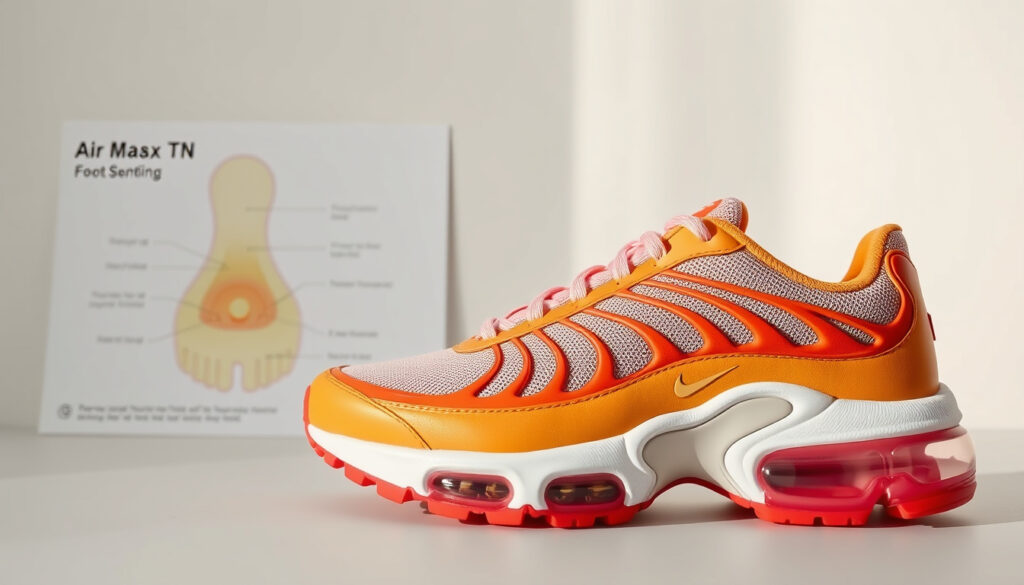
Nike Air Max Plus TN Guide: History, Performance, and Foot Health
You’ve seen them on feet around town — the wavy lines, the bold gradient, the iconic TN logo — because the Nike Air Max Plus debuted in 1998 as a Foot Locker exclusive, and it’s been a cultural fixture ever since. But beyond the hype, how does it actually perform for running, the gym, and everyday wear? And what do foot health experts think?
Launch year: 1998 ·
Original designer: Sean McDowell ·
Key technology: Tuned Air cushioning ·
Upper material: Mesh with TPU overlays ·
Sneaker status: Iconic retro model
Quick snapshot
- Launched in 1998 as a Foot Locker exclusive (Crep Protect)
- Designed by Sean McDowell, inspired by Florida sunsets (Crep Protect)
- Features Tuned Air technology with individual air units (Sneaker.de)
- Original colorway: Black/White/Metallic Silver (Sneaker Freaker)
- Exact original retail price varies by region (End Clothing)
- Total number of colorways released since 1998 not officially listed (Sole Season)
- Timing of some retro releases remains approximate (Sneaker Freaker)
- 1998: Original launch (End Clothing)
- 2000: Air Max Plus II released (Sneaker.de)
- 2010s: Retro releases and collaborations (Sole Season)
- 2023: 25th anniversary celebration (Sole Season)
- Continued retro releases and limited-edition collaborations (Sole Season)
- Growing interest in Tuned Air tech for everyday comfort (Sneaker Freaker)
Six key specs define the Nike Air Max Plus, one pattern: a shoe built for style with genuine performance roots.
| Spec | Value |
|---|---|
| Release year | 1998 |
| Designer | Sean McDowell |
| Original colorway | Black / White / Metallic Silver |
| Key technology | Nike Tuned Air (TN) |
| Upper material | Mesh with TPU and synthetic leather overlays |
| Retail price (launch) | Approximately $150 |
What is Air Max Plus good for?
The Air Max Plus is a lifestyle sneaker with legitimate cushioning tech, but it’s not a performance shoe for serious athletes. The Tuned Air unit provides a cloud-like bounce for running, jumping, and walking, yet Nike positions it for daily wear, not high-impact training.
Can I run with Nike Air Max Plus?
- Light jogging and casual running are fine — the Max Air heel unit absorbs shock well (Sneaker.de)
- For serious distance running, the lack of a responsive midsole foam (like ZoomX) means it won’t compete with dedicated running shoes
What this means: the Air Max Plus works for a 5K on pavement, but a marathon runner will want a lighter, more efficient shoe.
Is Air Max for walking or exercise?
- Walking: excellent — the Tuned Air units offer targeted cushioning under the heel and forefoot
- General exercise: suitable for light gym circuits and casual basketball, but not for heavy lifting or plyometrics
The catch: the shoe’s weight (around 400g per shoe) adds fatigue during extended cardio sessions.
Can Nike Air Max Be Used for Training?
- Light weight training and cross-training: acceptable, but lateral stability is only moderate (Crep Protect notes the TN logo placement indicates design focus on style over function)
- For HIIT or agility work, a lower-profile trainer is safer
What this means: you get a shoe that works for daily wear and light activity, but don’t expect high performance.
When did Nike Air Max Plus?
How old is the Air Max Plus?
- Born in 1998, making it 27 years old as of 2025
- The TN has never been fully discontinued — a rare feat for a sneaker (Sneaker Freaker)
Designer Sean McDowell drew inspiration from Florida beach sunsets: the gradient upper mimics waves and palm trees, according to Crep Protect. The shoe was originally a Foot Locker exclusive at a $125 price point, and it became one of Nike’s best sellers that year.
The Air Max Plus is one of the few sneakers that bridged the 1990s design language with futuristic tech — and never went out of style. Its longevity reflects Sean McDowell’s vision.
The implication: the Air Max Plus has maintained relevance by balancing style and comfort over time.
Are Nike TN Air Max Plus Good for Light Running & Gym Workouts?
- Light running: possible — the Tuned Air unit provides a stable, cushioned ride for short distances
- Gym workouts: suitable for light cardio and lifting, but avoid heavy squats or box jumps (Sneaker Freaker notes the lack of a supportive exoskeleton on the original model)
- The TN variant’s Tuned Air also offers lateral stability, but the mesh upper is less supportive than modern training shoes
The trade-off: you get retro style and all-day comfort, but you sacrifice the responsiveness and stability of purpose-built footwear.
Is the Nike Air Max Plus popular?
- Iconic status in sneaker culture, especially in the UK and Ireland where it became a youth culture staple in the late 1990s-2000s
- Numerous colorways and high-profile collaborations with A-COLD-WALL, Patta, and Supreme
- Enduring popularity since 1998 — it has never been out of production
The pattern: the Air Max Plus is one of the most recognizable sneakers ever, but its popularity is driven more by street style than athletic performance.
Does Nike make diabetic shoes?
Why can’t diabetics soak feet?
- According to the Mayo Clinic, people with diabetes should avoid soaking their feet because it can cause skin breakdown and infection.
- Proper foot care for diabetics includes daily inspection, moisturizing (but not between toes), and wearing properly fitted shoes.
Do podiatrists recommend Nike?
- The Air Max Plus is not specifically marketed as diabetic footwear, but podiatrists often recommend Nike’s Air Max line for patients with wide feet and cushioning needs (American Podiatric Medical Association guidelines note that well-cushioned shoes with a wide toe box can help reduce foot pain).
- Nike offers some shoes with extra depth and removable insoles, but the Air Max Plus is best suited for casual wear rather than therapeutic use.
If you have diabetes or foot health concerns, consult a podiatrist before buying any footwear. The Air Max Plus is not a medical device.
The pattern: while not a medical solution, the Air Max Plus offers cushioning that can benefit those with mild foot discomfort.
Timeline
- 1998 — Nike Air Max Plus (TN) launched, designed by Sean McDowell
- Early 2000s — Gained massive popularity in UK and Australian sneaker scenes
- 2010s — Re-released as a retro model with updated colorways and collaborations
- 2023 — 25th anniversary celebrations and new limited editions
Clarity check
Confirmed facts
- Launch year is 1998
- Designer is Sean McDowell
- Original technology is Tuned Air
- Inspired by palm trees and sunsets
What’s unclear
- Exact original retail price across all regions
- Total number of colorways released
- Diabetic-specific certification for Air Max Plus (not officially listed)
Expert perspectives
“An innovative Max Air unit in the heel and forefoot of our Nike Air Max TN shoes creates a cloud-like bounce, whether you’re running, jumping or walking.”
— Nike product description (Nike official site)
“The Nike Tuned collection, famously known as the Nike Air Max Plus TN or just Nike TN, entered the sneaker scene in the late 1990s and made an instant impact.”
The Air Max Plus isn’t just a sneaker; it’s a design icon that keeps showing up. For anyone in the market for a comfortable, head-turning lifestyle shoe, the choice is clear: grab a pair from the latest retro drop, or hunt down an original colorway. Your feet will thank you — just don’t expect it to replace your running shoes.
Frequently asked questions
What is the difference between Nike Air Max Plus and Nike Air Max TN?
They are the same shoe. “TN” stands for “Tuned Air,” the cushioning technology used in the Air Max Plus. The terms are used interchangeably.
How do Nike Air Max Plus fit – are they true to size?
Most reviewers say they fit true to size, though those with wide feet may want to go half a size up. The mesh upper gives some flexibility.
Can I wear Nike Air Max Plus every day?
Yes — the Tuned Air cushioning is designed for all-day comfort, and the durable outsole holds up well. They are ideal for daily casual wear.
Are Nike Air Max Plus good for wide feet?
The mesh upper accommodates wider feet better than many leather sneakers. Podiatrists often recommend the Air Max line for wide feet due to the roomy toe box.
How do I clean my Nike Air Max Plus sneakers?
Use a soft brush with mild soap and water. Avoid machine washing. Air dry away from direct heat. The mesh upper cleans easily.
Do Nike Air Max Plus have good arch support?
Arch support is moderate. If you need high arch support, consider adding an orthotic insole. The removable insole allows customization.
What are the rarest colorways of Nike Air Max Plus?
Original “Hyper Blue” and “Orange Tiger” from 1998 are very rare. Collaboration colorways with Patta and Supreme are also highly sought after.
Meer gerelateerde berichten
 Josh Allen Hailee Steinfeld – Complete Relationship Timeline
 Steve Harvey Net Worth, Family, and Career Facts
 Canadian Tire Hudson’s Bay: Acquisition, Plans, Stripes
 Kate Gosselin Now: Life After Jon & Kate Plus 8
 Logan Paul Net Worth, Health, and Career: Full Breakdown
 Shawn Michaels: Career, Net Worth, and Life After WWE
 Van der Valk Hotel Apeldoorn – Priser, faciliteter & recensioner
