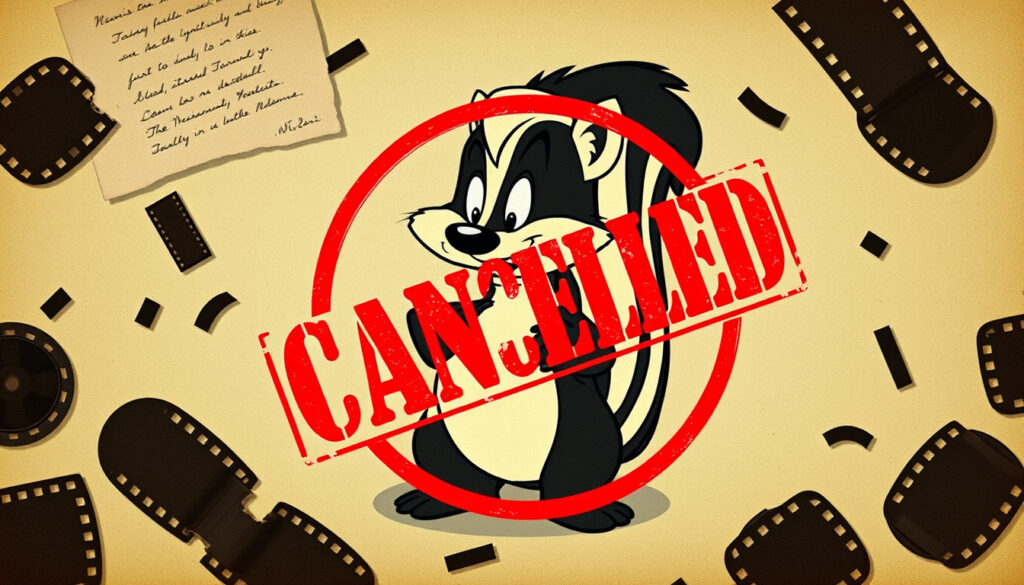
Pepé Le Pew Controversy: Why He Was Canceled
Few cartoon characters have sparked as much soul-searching as Pepé Le Pew. The French-accented skunk, created by Chuck Jones in 1945, once charmed audiences with his persistent wooing of Penelope Pussycat—but by 2021, Warner Bros. decided to leave him out of new projects, igniting a national debate about consent, comedy, and cancel culture. This article traces the arc of that debate, from the character’s debut in “Odor-able Kitty” to his quiet retirement.
First appearance: 1945 ·
Creator: Chuck Jones ·
Species: Skunk ·
Studio: Warner Bros. ·
Series: Looney Tunes / Merrie Melodies
Quick snapshot
- Pepé Le Pew debuted in 1945 (Wikipedia entry on the character)
- Catchphrase: “I love you!” (Wikipedia entry on the character)
- Warner Bros. announced retirement in 2021 (The Independent report)
- Exact number of cartoons (17 vs 19, sources differ)
- Whether Penelope ever truly reciprocates (subject to interpretation)
- March 2021: Pepé Le Pew cut from Space Jam: A New Legacy (Snopes fact-check)
- Character remains absent from new Looney Tunes projects (Uproxx entertainment news)
Six key facts about the character, one pattern: every major milestone leads to the same question about when a joke stops being funny.
| Label | Value |
|---|---|
| First appearance | 1945 in “Odor-able Kitty” (Wikipedia entry on the character) |
| Voice actors | Mel Blanc (original) (Wikipedia entry on the character) |
| Total cartoons | 17 official Looney Tunes shorts (BBC Culture arts analysis) |
| Catchphrase | “I love you!” (Wikipedia entry on the character) |
| Companion | Penelope Pussycat (often mistaken) (The Guardian culture commentary) |
| Removal announcement | 2021 by Warner Bros. (The Independent report) |
Why was Pepé Le Pew canceled?
Timeline of criticism and Warner Bros. response
- 1945–1960s: Pepé Le Pew appears in 17+ Looney Tunes shorts, always pursuing a female cat he mistakes for a skunk. His behavior is played for laughs (Wikipedia entry on the character).
- 2010s: Viewers and critics increasingly note that the character’s romantic pursuit resembles stalking and normalizes unwanted advances (The Guardian culture commentary).
- March 2021: Charles M. Blow publishes a New York Times op-ed linking Pepé Le Pew to rape culture. Warner Bros. confirms that a scene featuring the skunk was cut from Space Jam: A New Legacy (Snopes fact-check).
- March 8, 2021: Warner Bros. issues a statement that Pepé Le Pew will not appear in new projects, while legacy content remains available (The Independent report).
Media and public backlash
The removal story was quickly framed as a “cancellation” by outlets like Fox News, sparking debate over whether a fictional cartoon truly posed any harm (Snopes fact-check). Commentators pointed out that the change was limited to new productions, not a full library wipe. Actress Greice Santo criticized the decision, arguing it let the character off the hook without addressing the real issue (British Film Institute analysis).
The implication: what started as a simple production edit turned into a national culture-war flashpoint, with Pepé Le Pew as the unlikely symbol.
What was Pepé Le Pew’s famous line?
Origins of the catchphrase
Pepé Le Pew’s signature line is “I love you!” — delivered in a thick French accent, often after he has cornered Penelope Pussycat. The phrase first appeared in the 1949 short “For Scent-imental Reasons” and became his trademark (Wikipedia entry on the character).
Cultural impact of the line
The line is so iconic that it has been referenced in The Simpsons, Family Guy, and even in merchandise. In recent years, however, the same words that once drew laughs are now seen by many as emblematic of a cartoon that trivializes non‑consensual pursuit (BBC Culture arts analysis).
“Pepé Le Pew’s behavior is commonly summarized as repeatedly pursuing Penelope Pussycat despite her lack of consent.”
– The Guardian, 2021
The pattern: a line that once defined a beloved character now defines the controversy around him.
What is the meaning of Pepé Le Pew?
Name etymology
“Pepé” is a French diminutive of Joseph; “Le Pew” is a pun on “le puant” — French for “the stinky one.” The name literally means “little Joseph the stinky” (Wikipedia entry on the character). Creator Chuck Jones deliberately leaned into French stereotypes to heighten the romantic-pursuer archetype.
Character archetype
Pepé Le Pew is a parody of the French lover stereotype: charming, persistent, and oblivious to rejection. In the 1940s–50s, this was considered harmless comedy. By the 2010s, the same character was re‑read as promoting harassment (BBC Culture arts analysis). The shift reflects broader changes in how society understands consent.
The catch: what was once a cultural punchline became a cultural problem.
Why is Pepe Le Pew offensive today?
Criticism of non-consensual pursuit
Pepé Le Pew’s cartoons routinely show him chasing, kissing, and pressuring a female cat who clearly tries to escape. Critics argue this trivializes sexual harassment and stalking. The New York Times op-ed that ignited the 2021 controversy explicitly used the phrase “rape culture” (The Independent report).
Changes in social norms
What played as slapstick romance in the 1950s reads differently in a post-#MeToo era. Warner Bros. acknowledged this shift when it stated the character had “limited relevance” to modern audiences (Uproxx entertainment news). The debate boiled down to a single question: can a cartoon be retired without erasing history?
Warner Bros. chose to stop producing new content featuring Pepé Le Pew, but kept old cartoons accessible. For critics, that’s a reasonable middle ground. For defenders, it’s censorship. No side can claim victory because the character’s meaning has permanently changed.
Did Penelope ever love Pepé?
Plot dynamics in cartoons
In nearly every short, Penelope Pussycat — or a cat mistaken for a skunk — frantically runs away from Pepé’s advances. Writers designed the chase as the punchline: the harder she flees, the more he pursues (The Guardian culture commentary).
Fandom interpretations
In a handful of later cartoons, Penelope appears dazed after a kiss, leading some fans to speculate she secretly liked him. However, these moments are ambiguous and inconsistent. The official consensus is that the chase is coercive, not romantic (BBC Culture arts analysis).
Why this matters: the debate over Penelope’s feelings mirrors the larger cultural argument — does a cartoon character’s intent excuse its impact?
Timeline of Pepé Le Pew
| Date | Event |
|---|---|
| 1945 | First appearance in “Odor-able Kitty” (Wikipedia entry on the character) |
| 1945–1960s | Regular appearances in Looney Tunes shorts (Wikipedia entry on the character) |
| 1990s–2000s | Continued use in merchandise and TV reruns (BBC Culture arts analysis) |
| 2010s | Growing criticism of the character’s depiction of romance (The Guardian culture commentary) |
| March 2021 | Warner Bros. confirms removal from Space Jam 2 and new projects (Snopes fact-check) |
| 2021–present | Character not used in new Looney Tunes content (Uproxx entertainment news) |
What we know vs. what remains unclear
Confirmed facts
- Pepé Le Pew first appeared in 1945 (Wikipedia entry on the character)
- His catchphrase is “I love you” (Wikipedia entry on the character)
- Warner Bros. retired him from new projects in 2021 (The Independent report)
- His name is a pun on “le puant” (Wikipedia entry on the character)
What’s unclear
- Whether the total number of official cartoons is 17 or 19 (BBC Culture arts analysis vs. Wikipedia entry on the character)
- If Penelope ever truly reciprocated in any version
- Whether the removal is permanent or just a “hold”
- How much the 2021 op-ed actually influenced Warner Bros.’ decision
Key voices in the debate
“We are committed to telling inclusive stories and will not include Pepé Le Pew in new projects.”
– Warner Bros. spokesperson, 2021 (via The Independent report)
“The removal decision appeared to let Pepé off the hook for his behavior.”
– Greice Santo, actress and critic, as reported by British Film Institute analysis
For Warner Bros., the decision to retire Pepé Le Pew reflects a broader reckoning: either adapt classic characters to modern sensibilities or risk alienating a new generation of viewers. The skunk’s fate, much like that of other contentious properties such as Ash vs Evil Dead, shows that cultural relevance is never a given — it has to be earned and maintained. The studio chose to keep the old cartoons available for historical context but not produce new ones that might be read as endorsing harmful behavior.
youtube.com, movieweb.com, youtube.com, looneytunes.fandom.com, imdb.com, linkedin.com
Frequently asked questions
Was Pepé Le Pew banned from all platforms?
No. Legacy content remains available on streaming and DVD. Only new productions have been halted (Snopes fact-check).
How many Pepé Le Pew cartoons were made?
Most sources count 17 official Looney Tunes shorts, though some lists include up to 19 (Wikipedia entry on the character).
What does the name Pepé Le Pew translate to?
“Pepé” is French for “Joe” (short for Joseph); “Le Pew” is a pun on “le puant,” meaning “the stinky” (Wikipedia entry on the character).
Did Pepé Le Pew ever find true love?
In the cartoons, Penelope Pussycat always tries to escape. A few ambiguous moments where she seems to briefly kiss him back are widely considered exceptions, not proof of mutual affection (The Guardian culture commentary).
Is Pepé Le Pew based on a real skunk?
No. He is entirely a fictional creation of animator Chuck Jones, though skunks do exist in nature (Wikipedia entry on the character).
Why did Warner Bros. stop using Pepé Le Pew?
The official reason is that the character’s behavior no longer aligns with the studio’s values of inclusivity and consent (Uproxx entertainment news).
What episode features Pepé Le Pew’s most famous line?
“I love you!” is memorably delivered in “For Scent-imental Reasons” (1949) and repeated in many other shorts (Wikipedia entry on the character).
Meer gerelateerde berichten
 Jude Bellingham: Biography, Career Decisions, and Key Facts
 Ville de Montreal Emploi: Jobs, Salaries & Open Positions
 Winter Dre e for Women: Style , Sale & Where to Buy in Ireland
 Madylin Sweeten: Life After Everybody Loves Raymond
 Cast of Sweet Magnolias: Full List, Recasts & Season 5 Updates
 Madea’s Big Happy Family: Where to Stream and Watch Online
 Nike Air Max Plus TN Guide: History, Performance, and Foot Health
 Lamine Yamal: Age, Salary, Idol & Messi Unfollow Facts
